Fotos: Tim Albrecht
Living together apart (Bad Krozingen)
series of 5 wall objects
digital print, MDF, woodglue, sand, sawdust, acrylic paint
Sjusanna Eremjan für „Coming of Age“, ICAT Hamburg, 2023
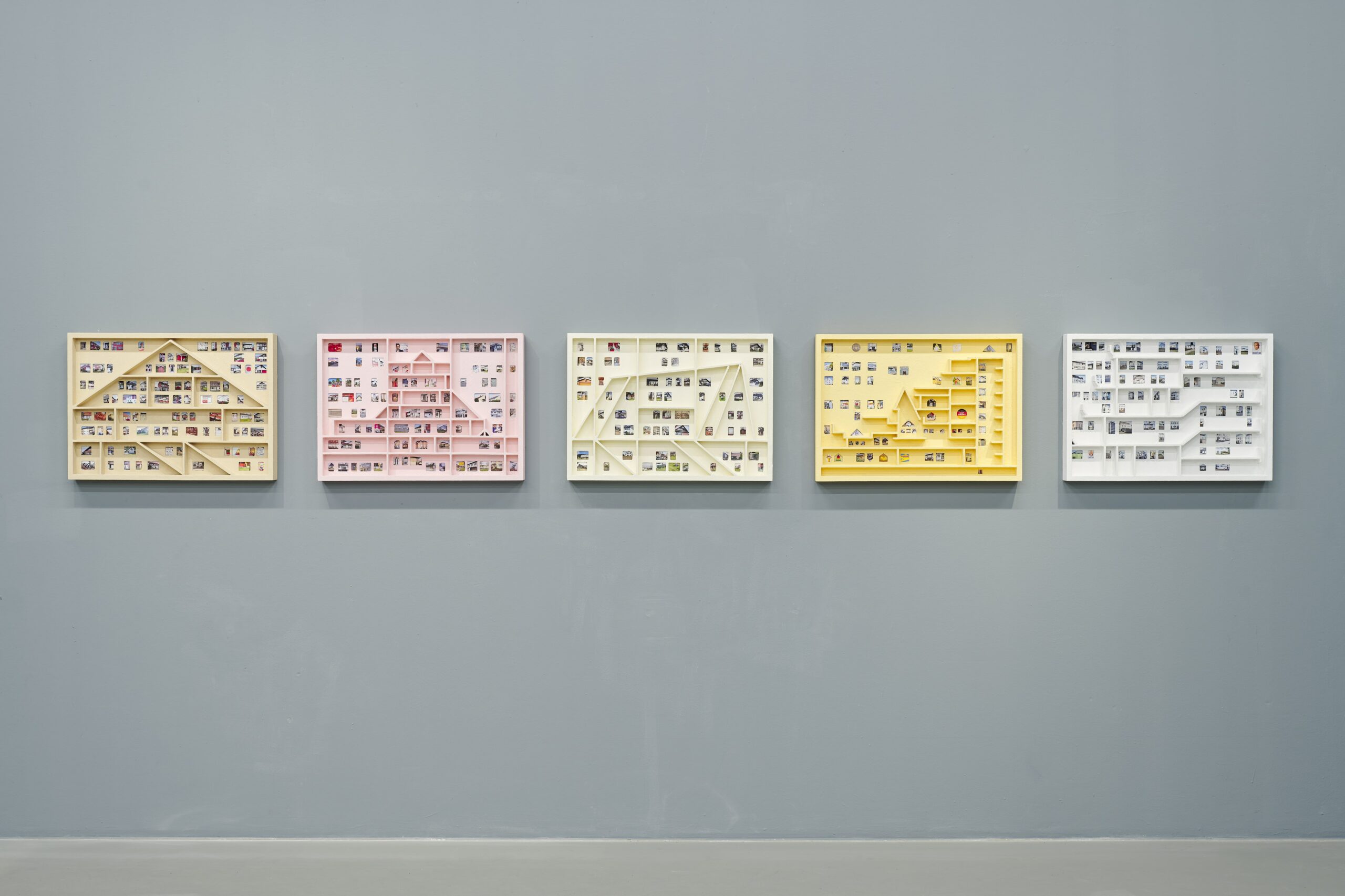
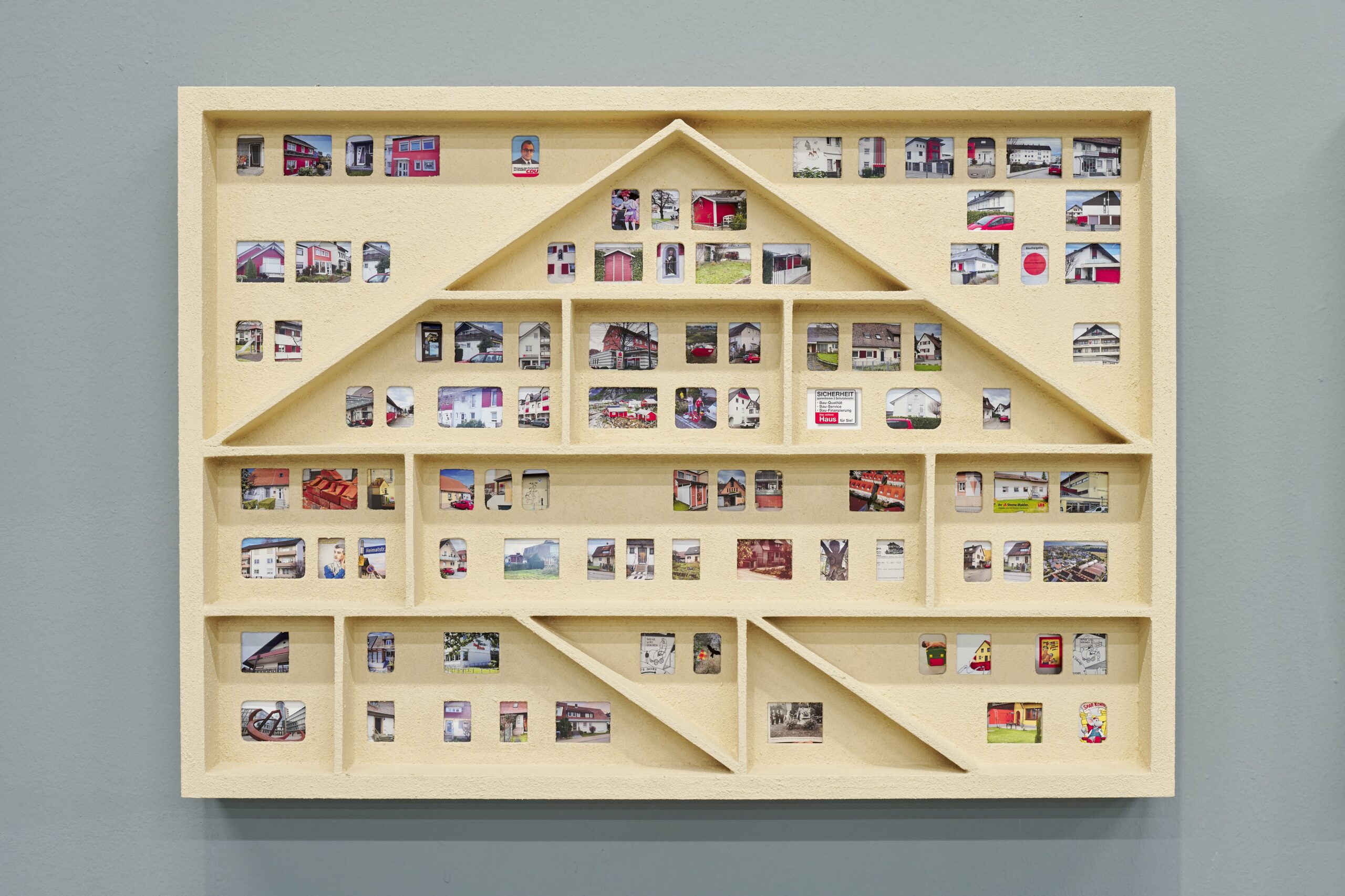
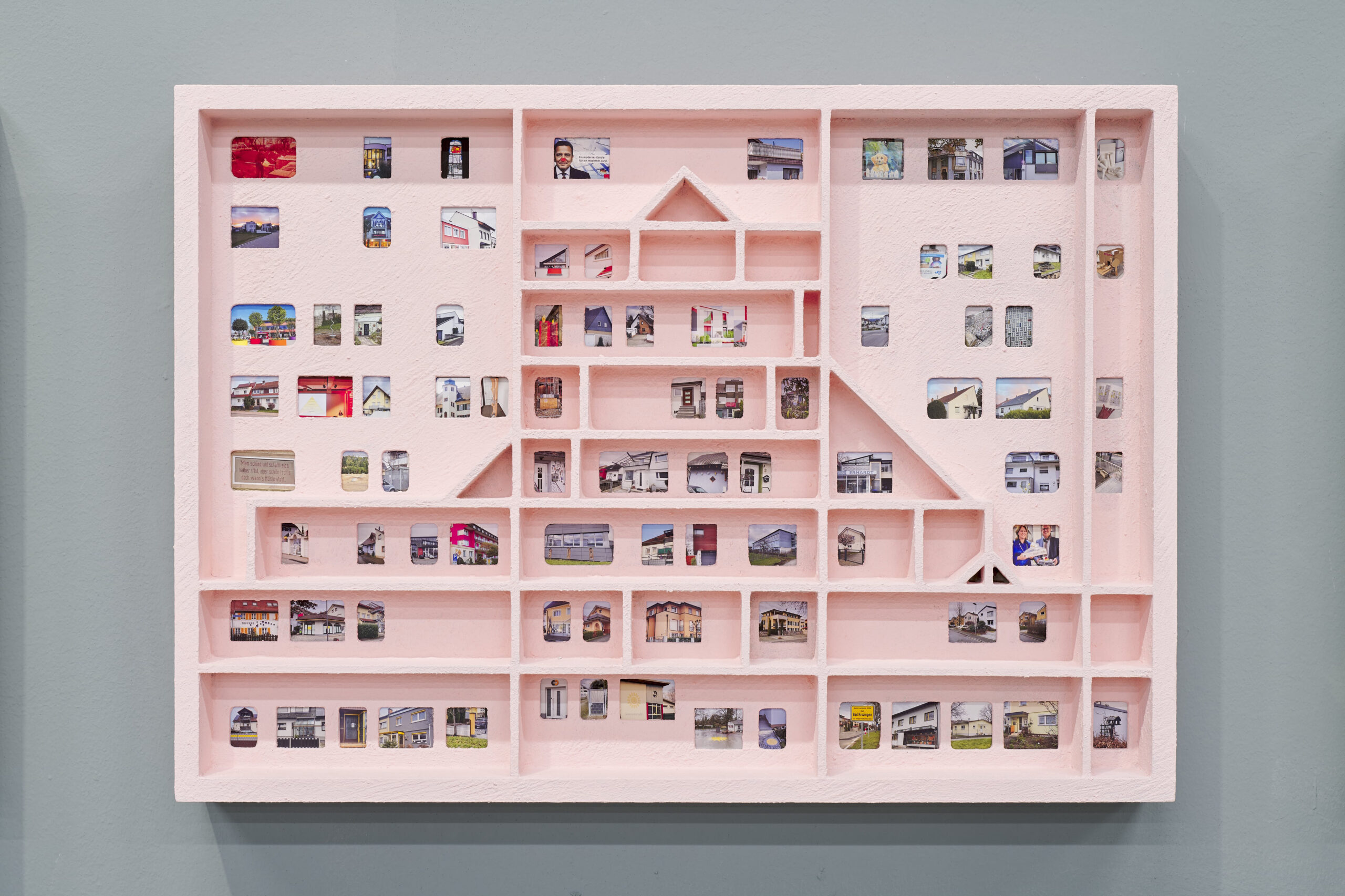
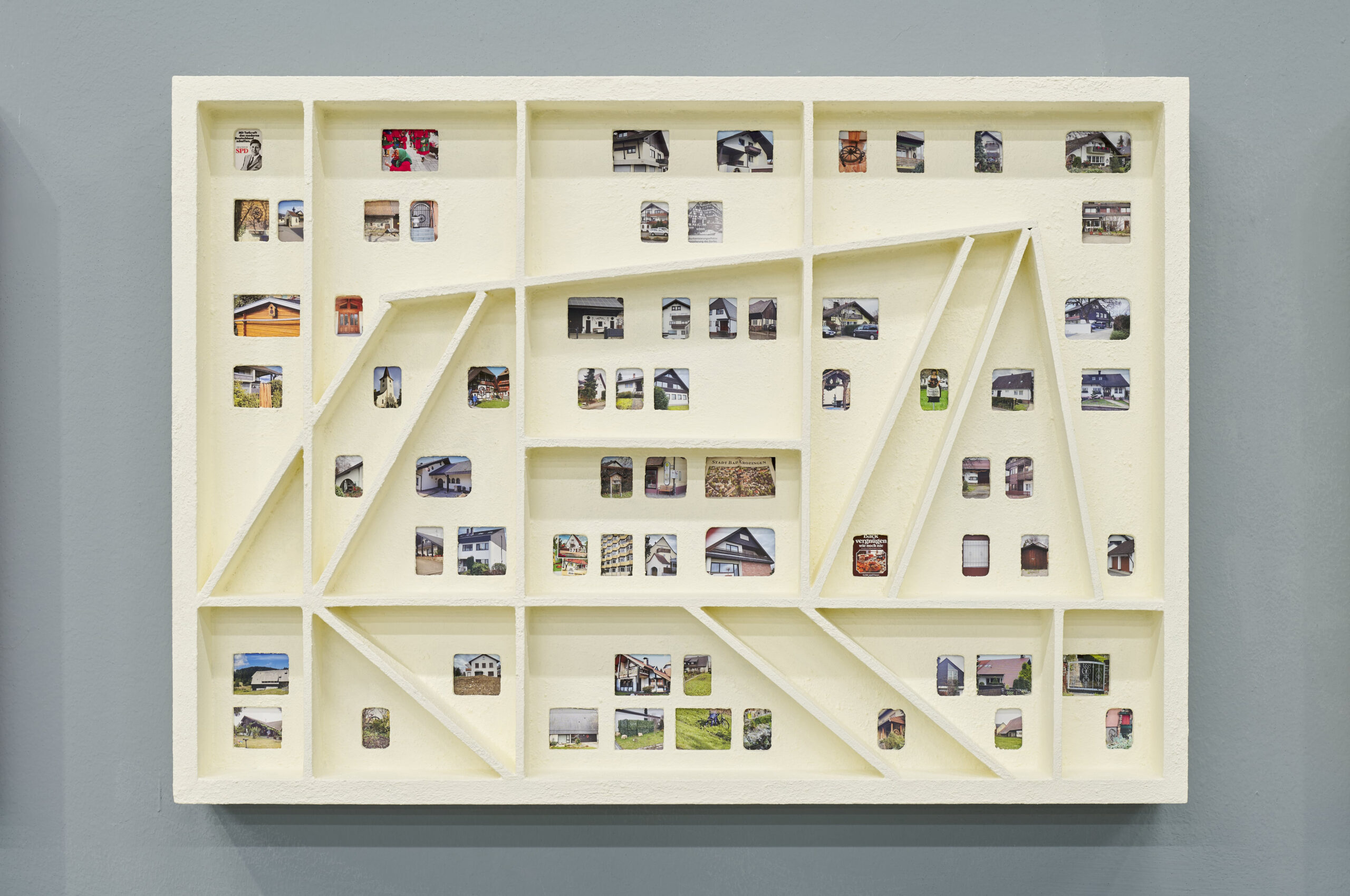
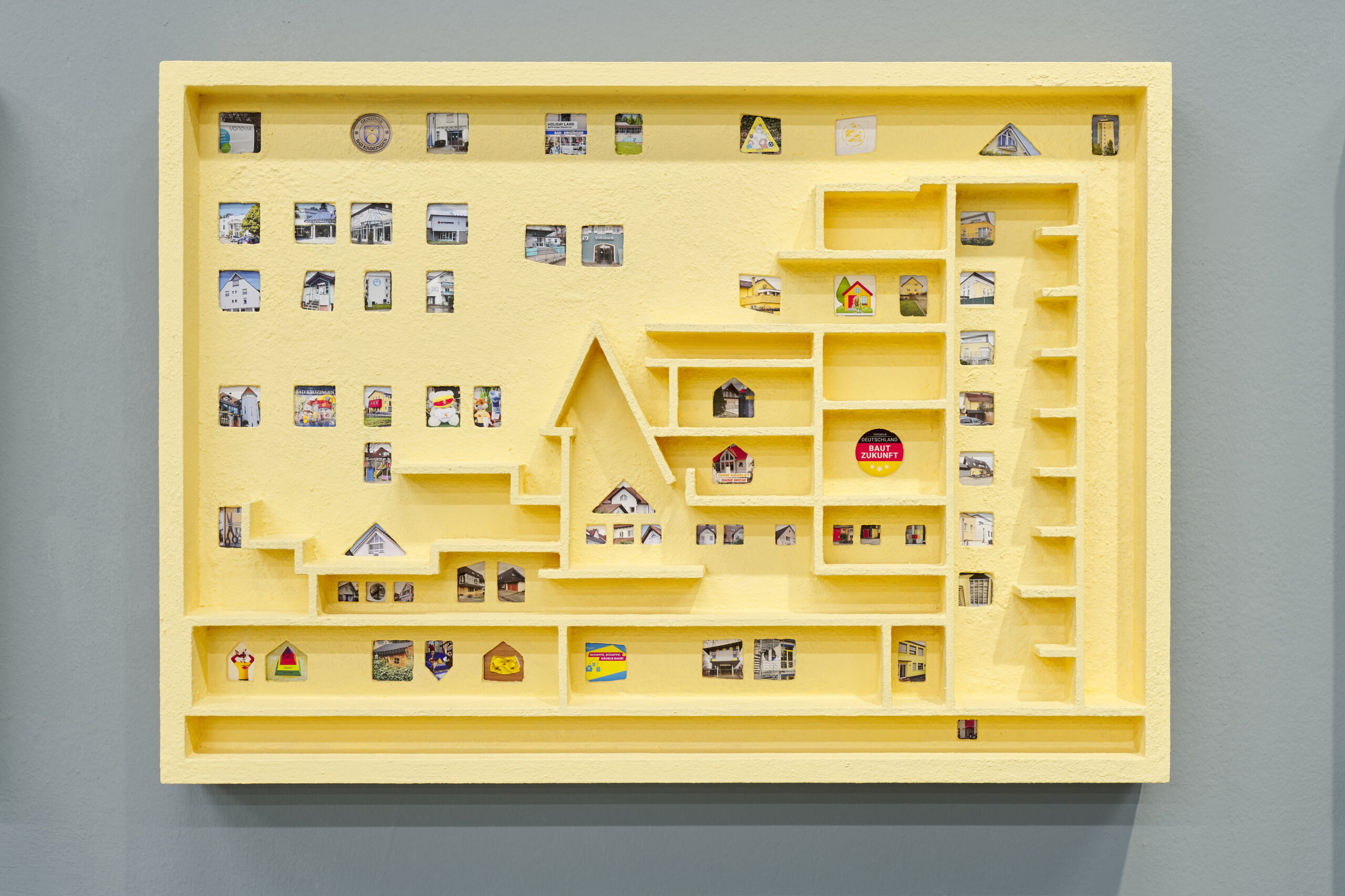
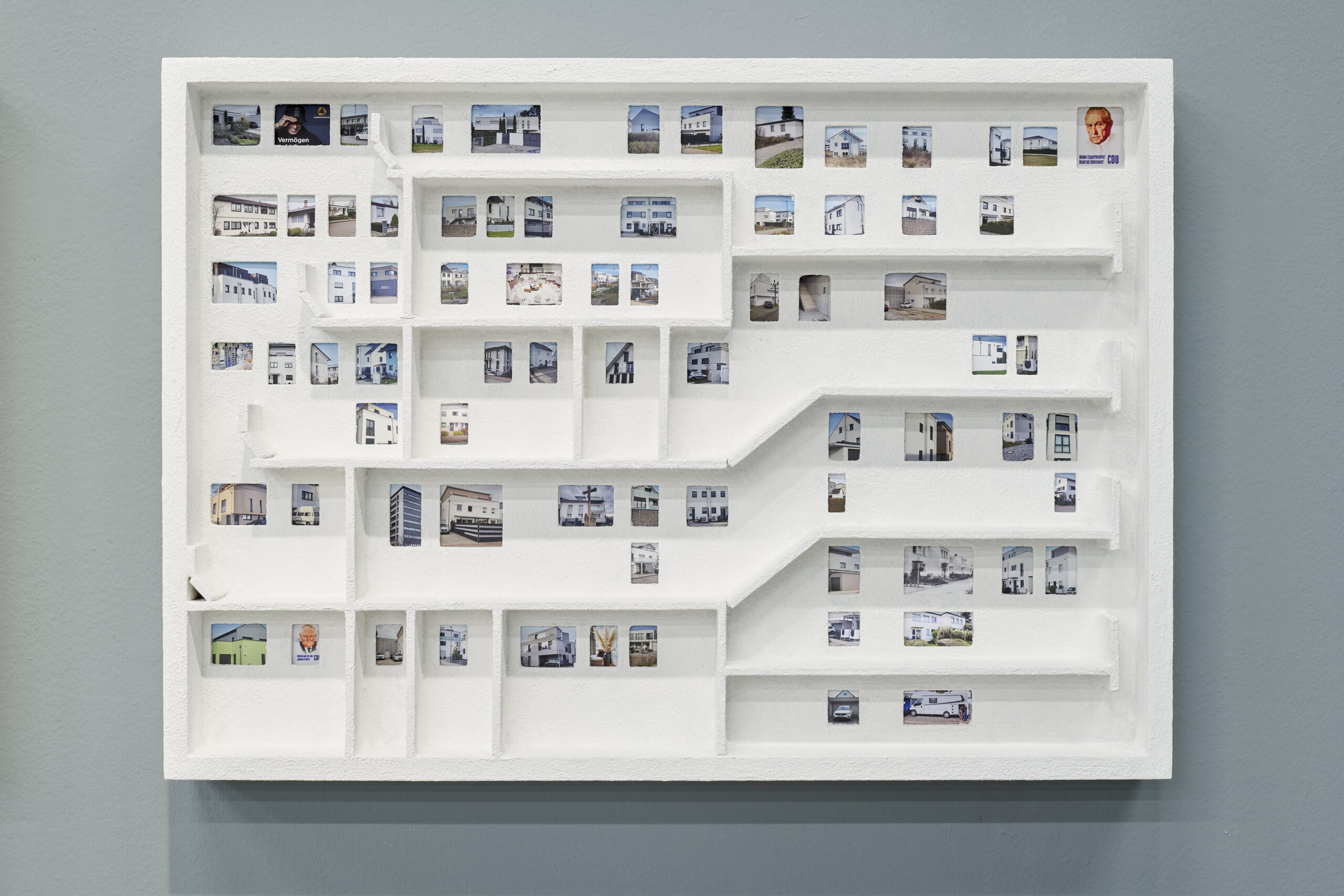
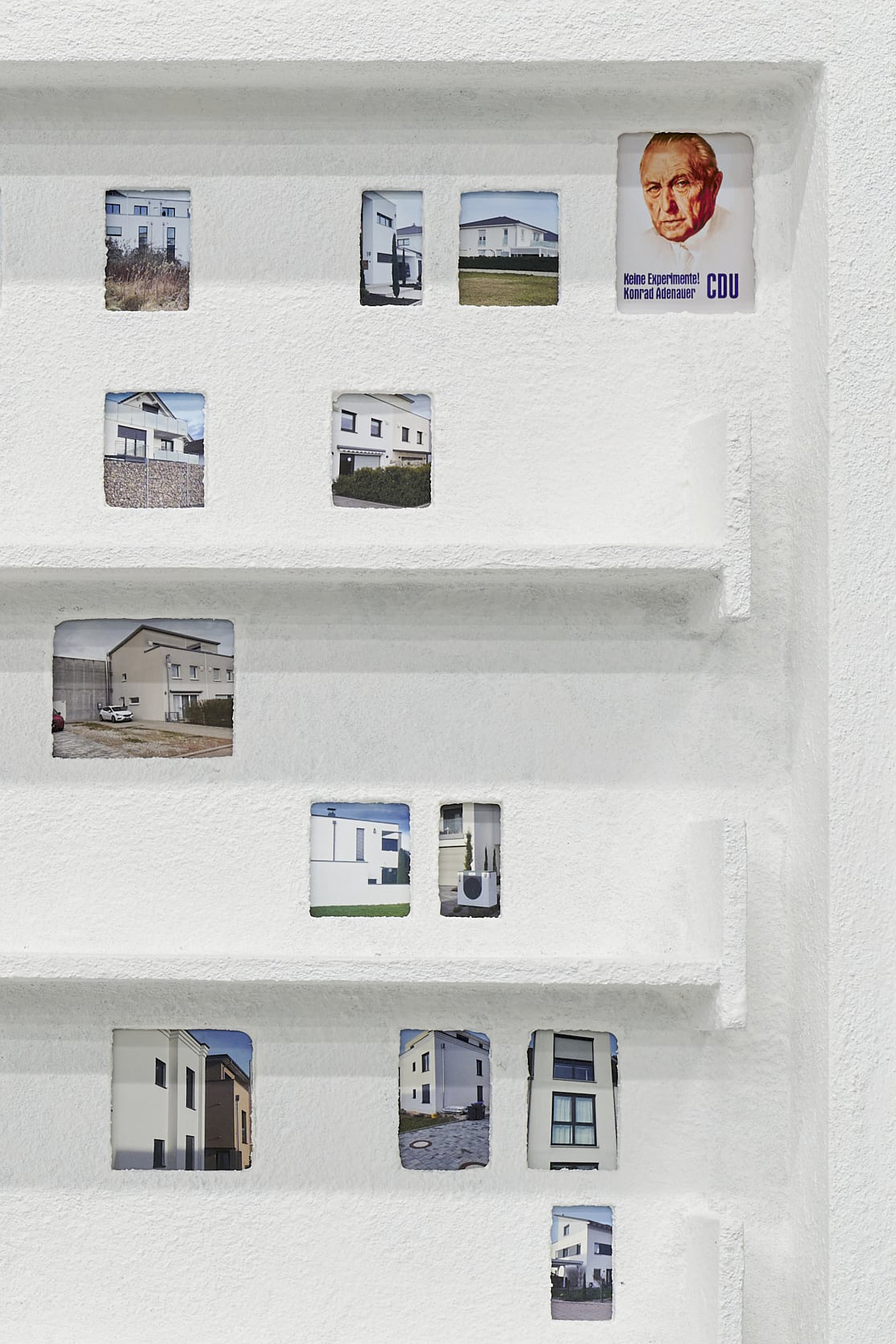
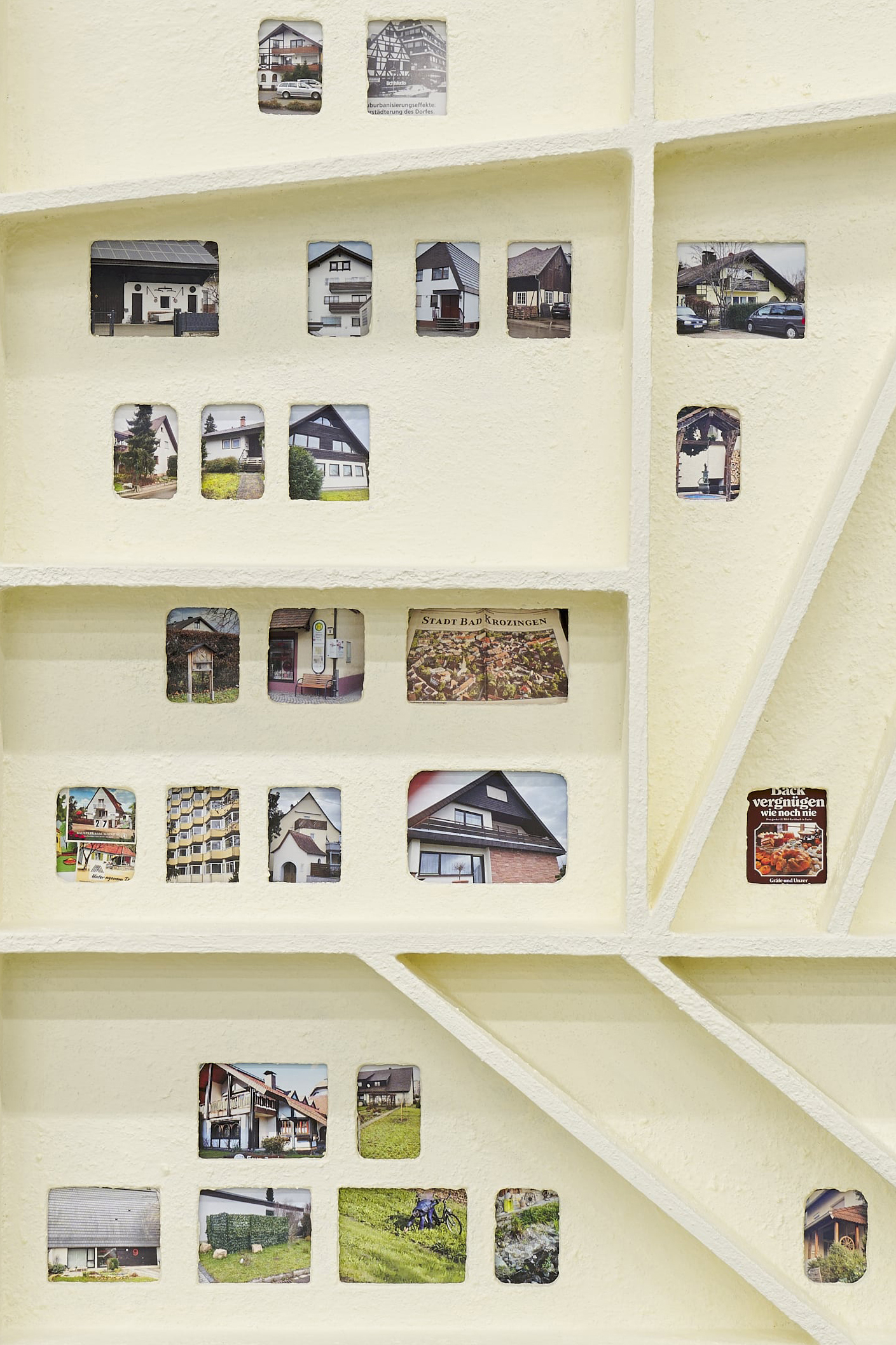
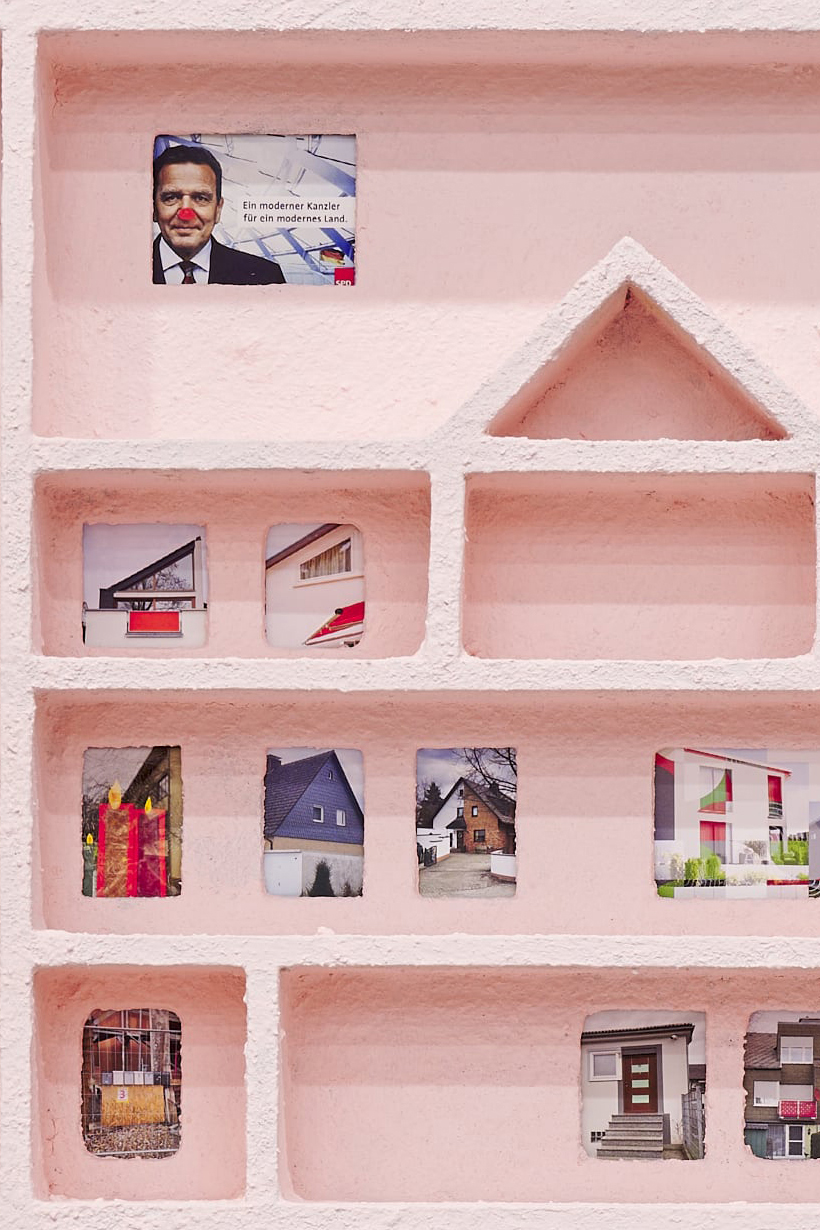
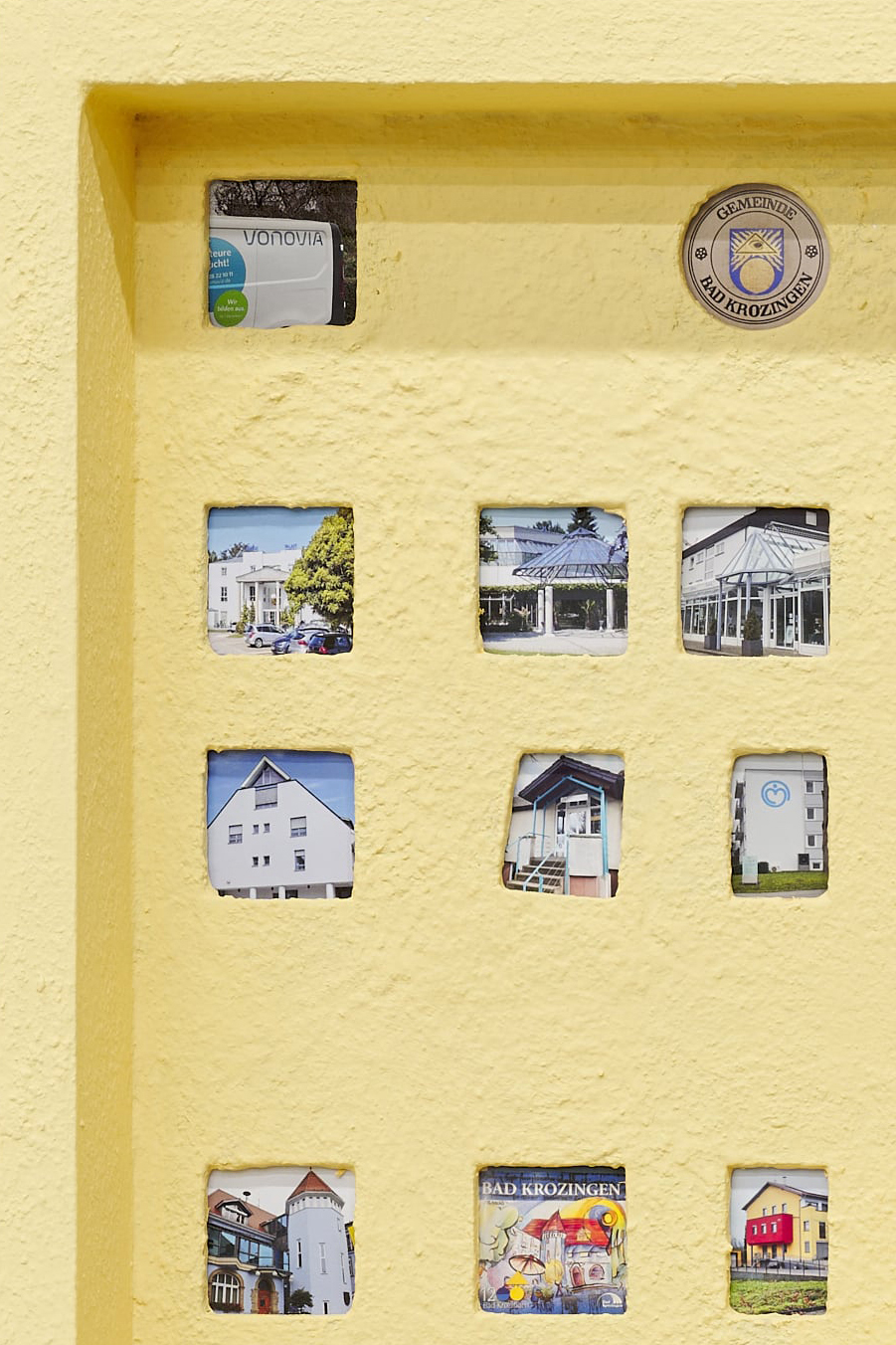
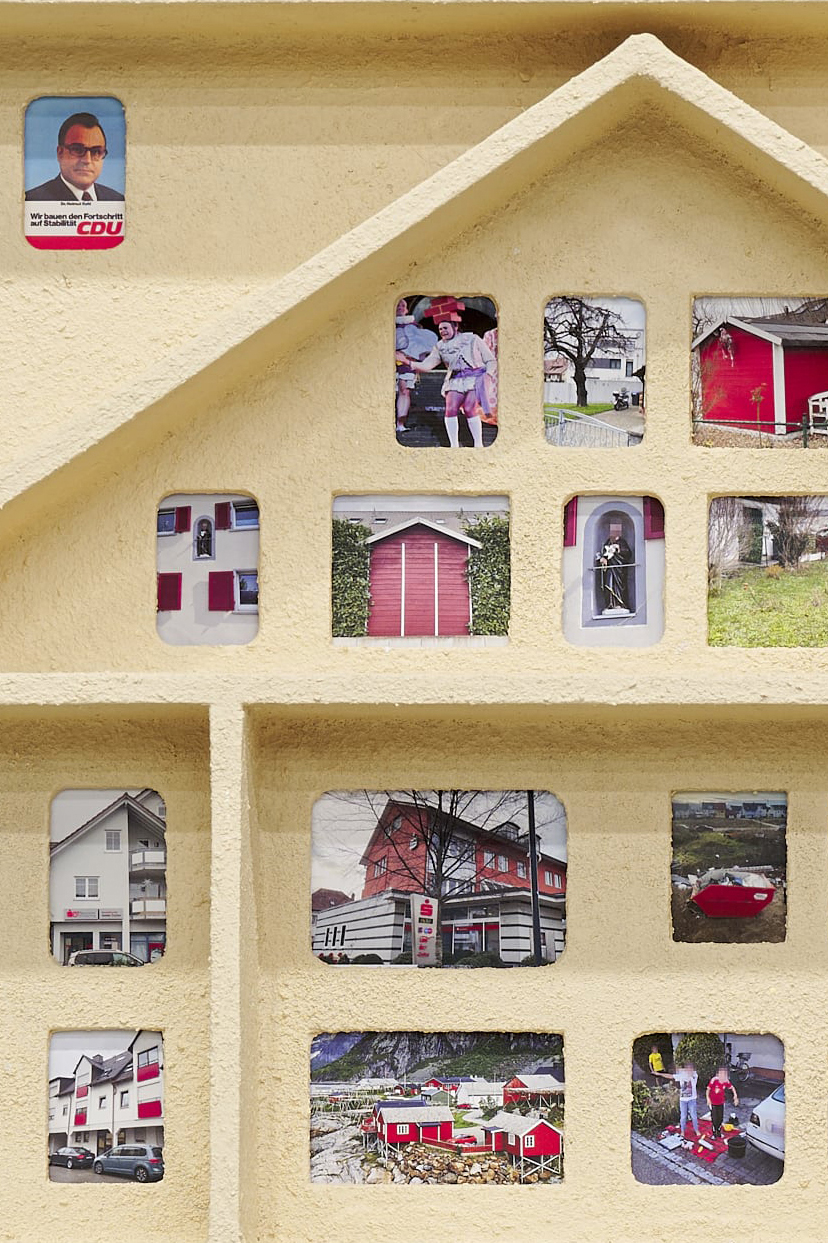
Seit der Nachkriegszeit wird das Eigenheim in der Bundesrepublik Deutschland politisch stark gefördert. Das Häuschen im Grünen gilt als der German Dream, ein bescheidener Wohlstand, der die Vorstellung einer breiten Mittelschicht verkörpert. Karla Zipfel geht diesem Versprechen anhand einer Typologie der Eigenheime ihres Herkunftsortes nach. Die Abbildungen sind auf Passbildgröße geschrumpft und gruppiert in Rahmen, die an Setzkästen erinnern. Unter die vermeintlich stilistische oder historische Sortierung der Hausfassaden mischen sich Bilder aus anderen Kontexten – Politik, Finanzwerbung, Trivia aus dem Kleinstadtalltag.
Der Titel Living together apart verweist dabei auf die widersprüchlichen Dynamiken des Eigenheims, das einerseits für Individualisierung und Rückzug sorgt, andererseits Teil von kollektiven Normierungsprozessen ist – die neben der Gestaltung des Hauses auch auf Wertevorstellungen und ganze Lebenswege übergreifen.
Die Unterteilungen der Setzkästen basieren auf den Querschnitten sogenannter Terrassenhäuser, die als architektonisches Konzept besonders in den 1970ern gebaut wurden und die Vorteile von Einfamilienhäusern in eine verdichtete Geschossbauweise integrieren wollten. Dieser Vision für innovatives und sozial verträgliches Bauen steht die bauliche Realität vieler Orte gegenüber, die das Ergebnis einer Jahrzehnte währenden Wohnpolitik sind, die sich anstelle von flächendeckenden Konzepten auf die Individualförderung von Wohneigentum fokussierte. Angesichts der derzeitigen Baupreisentwicklung und Diagnosen einer schrumpfenden Mittelschicht ist auch das Neobauhaus des jüngsten Neubaugebietes zum Luxusobjekt geworden.
Sjusanna Eremjan for „Coming of Age“, ICAT Hamburg, 2023
Since the post-war period, home ownership has been strongly promoted politically in the Federal Republic of Germany. The „Häuschen im Grünen“ (little house in the countryside) is seen as the German Dream, a modest prosperity that embodies the idea of a broad middle class. Karla Zipfel explores this promise using a typology of homes in her home town. The images are shrunk to passport photo size and grouped in frames reminiscent of type cases. Images from other contexts – politics, financial advertising, trivia from everyday life in small towns – are mixed in with the supposedly stylistic or historical sorting of the house facades.
The title “Living together apart” refers to the contradictory dynamics of home ownership, which on the one hand ensures individualization and retreat, and on the other is part of collective standardization processes – which, in addition to the design of the house, also extend to values and entire life paths.
The subdivisions of the settling boxes are based on the cross-sections of so-called terraced houses, which were built as an architectural concept, particularly in the 1970s, and aimed to integrate the advantages of single-family houses into a dense multi-storey construction. This vision for innovative and socially acceptable construction contrasts with the structural reality of many places, which is the result of decades of housing policy that has focused on promoting individual home ownership instead of comprehensive concepts. In view of the current development of building prices and diagnoses of a shrinking middle class, the Neobauhaus in the latest development area has also become a luxury property.