


Fotos: Karla Zipfel
Häuser und Maxime
sculptures, series of 5
MDF, plexi glass, wood glue, acrylic paint, found objects
Text: Heidi Brunnschweiler, Galerie für Gegenwartskunst Freiburg
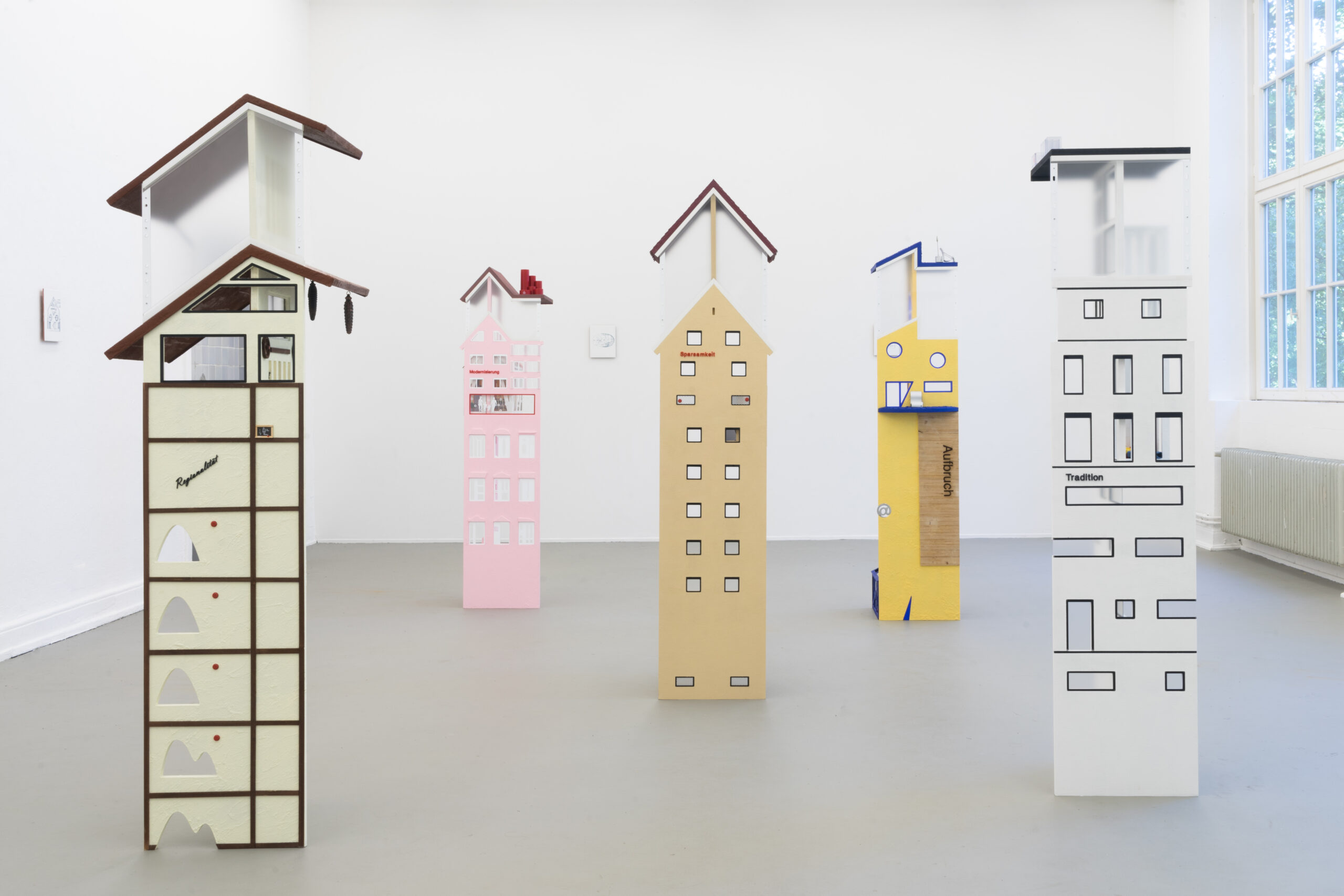
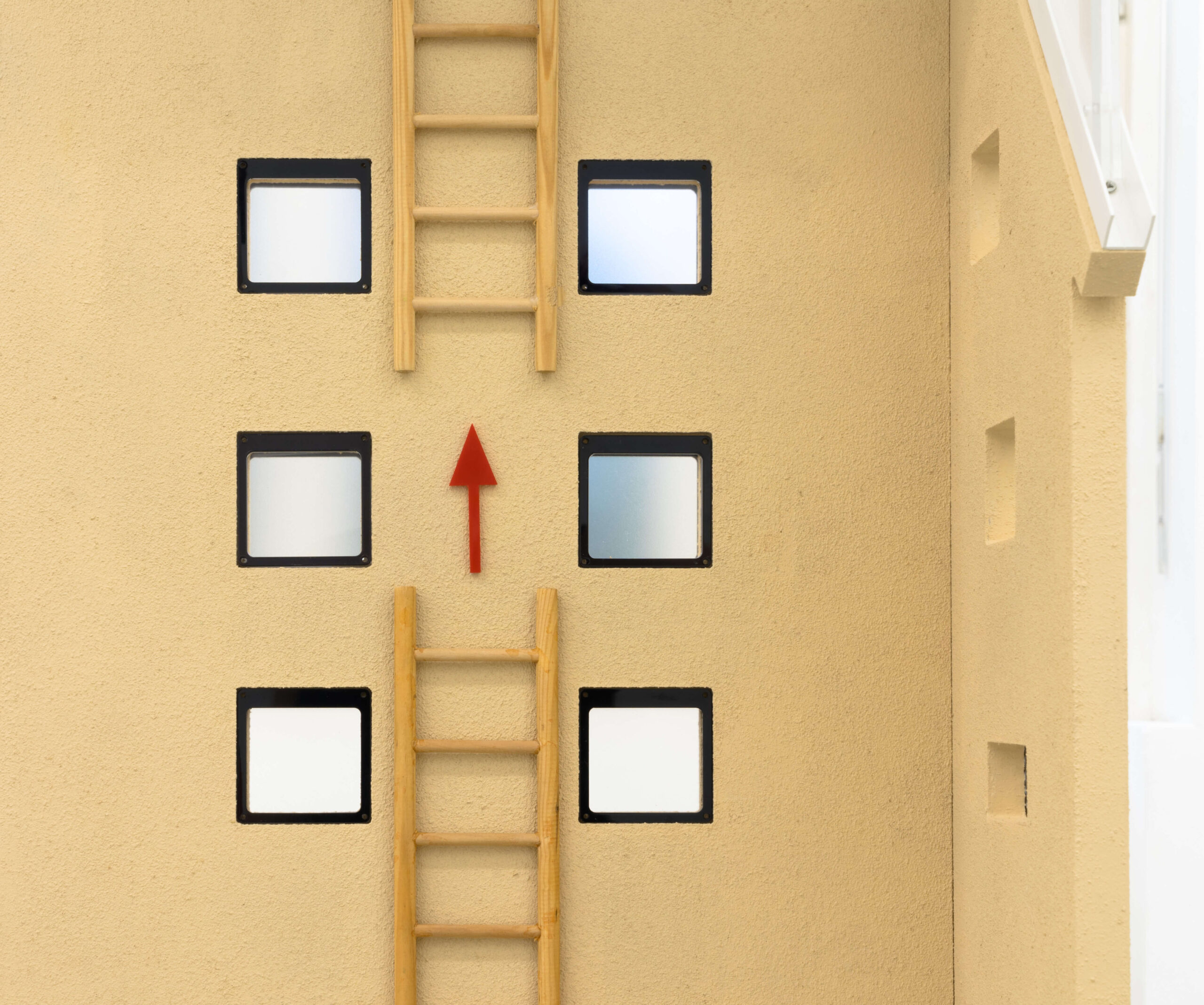
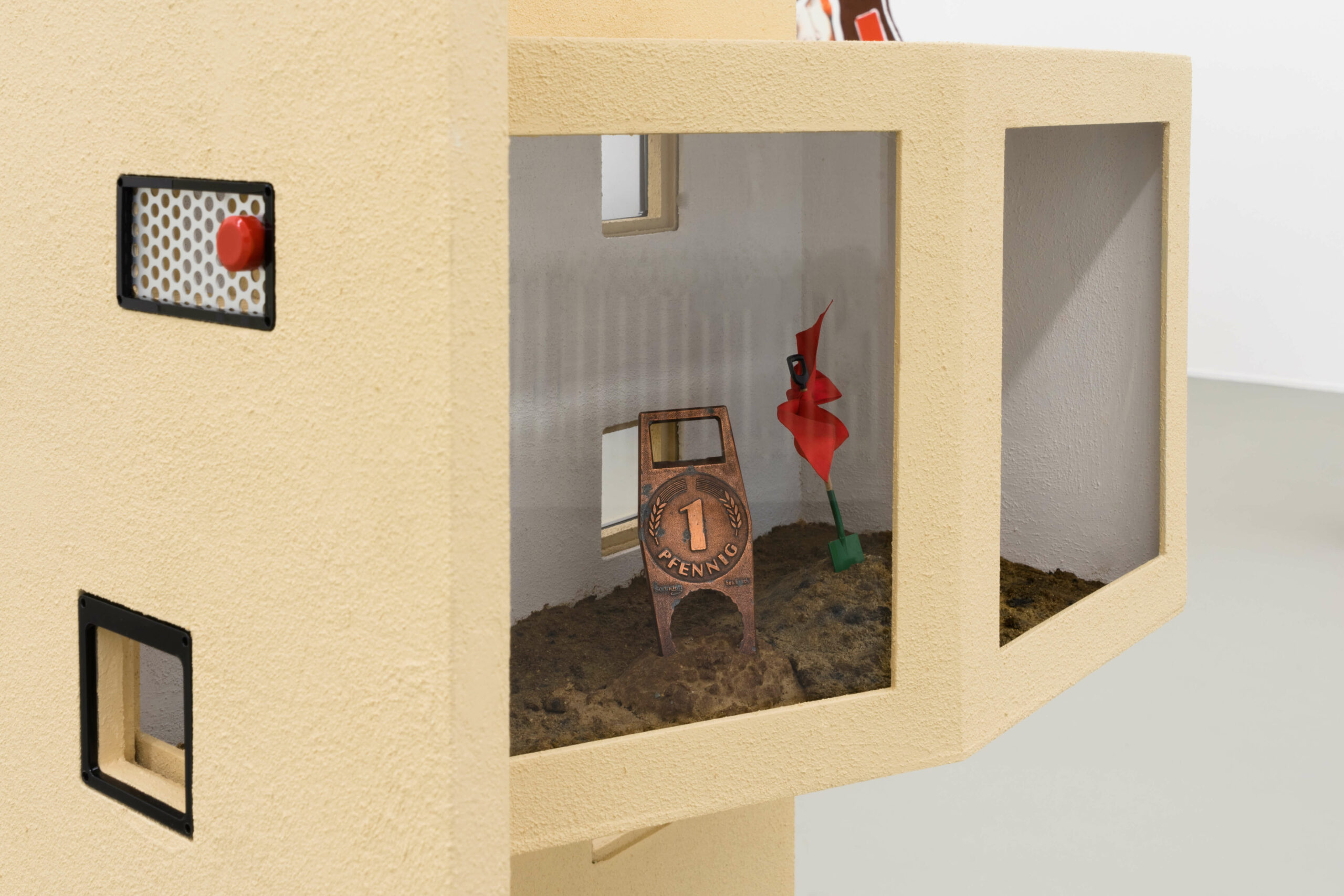
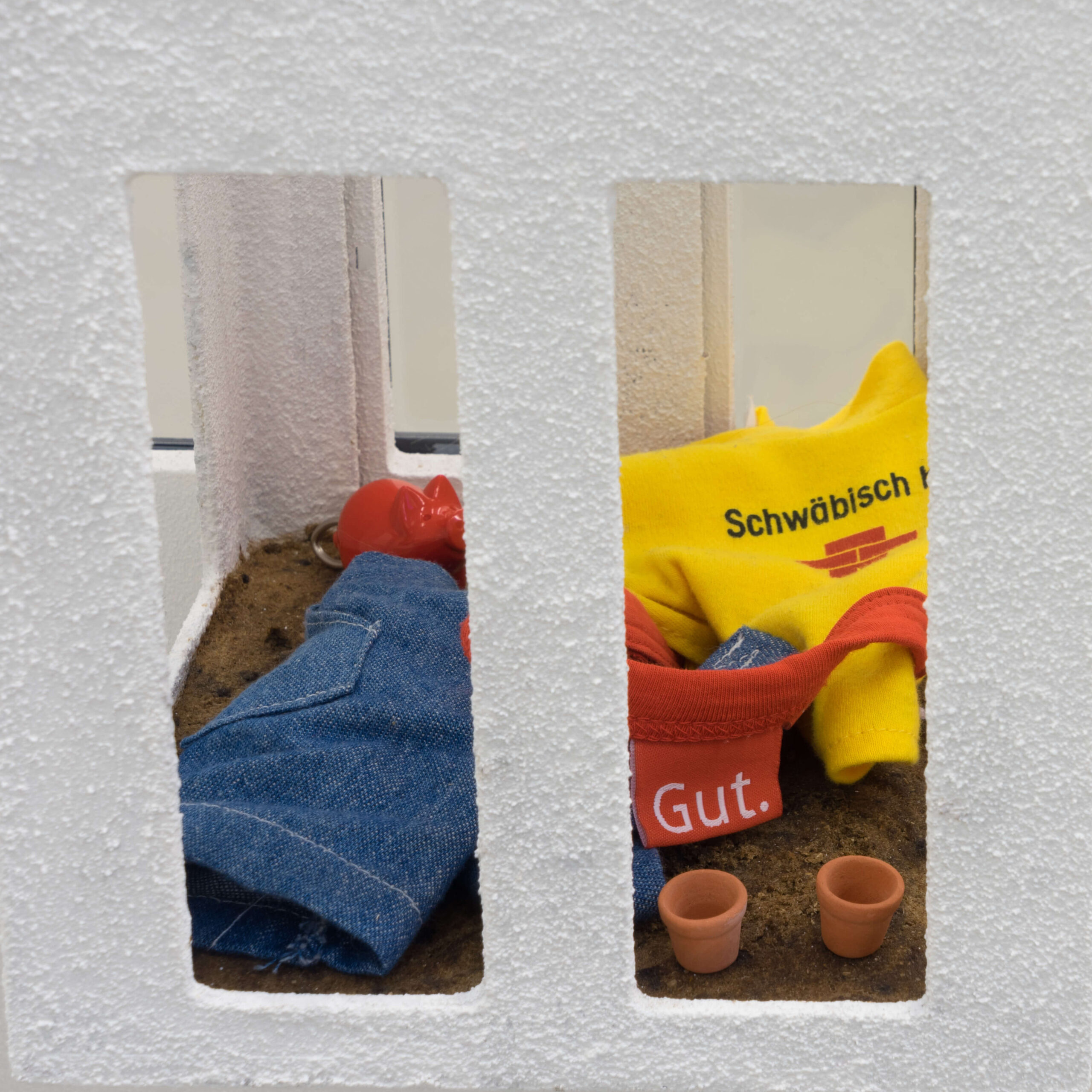
In ihrer Arbeit Häuser und Maxime präsentiert Karla Zipfel fünf architektonische Strukturen, die typische Eigenheimstile veranschaulichen. Diese Typologie hat sie auf Basis ihrer Feldstudien in Bad Krozingen formal und assoziativ entwickelt.
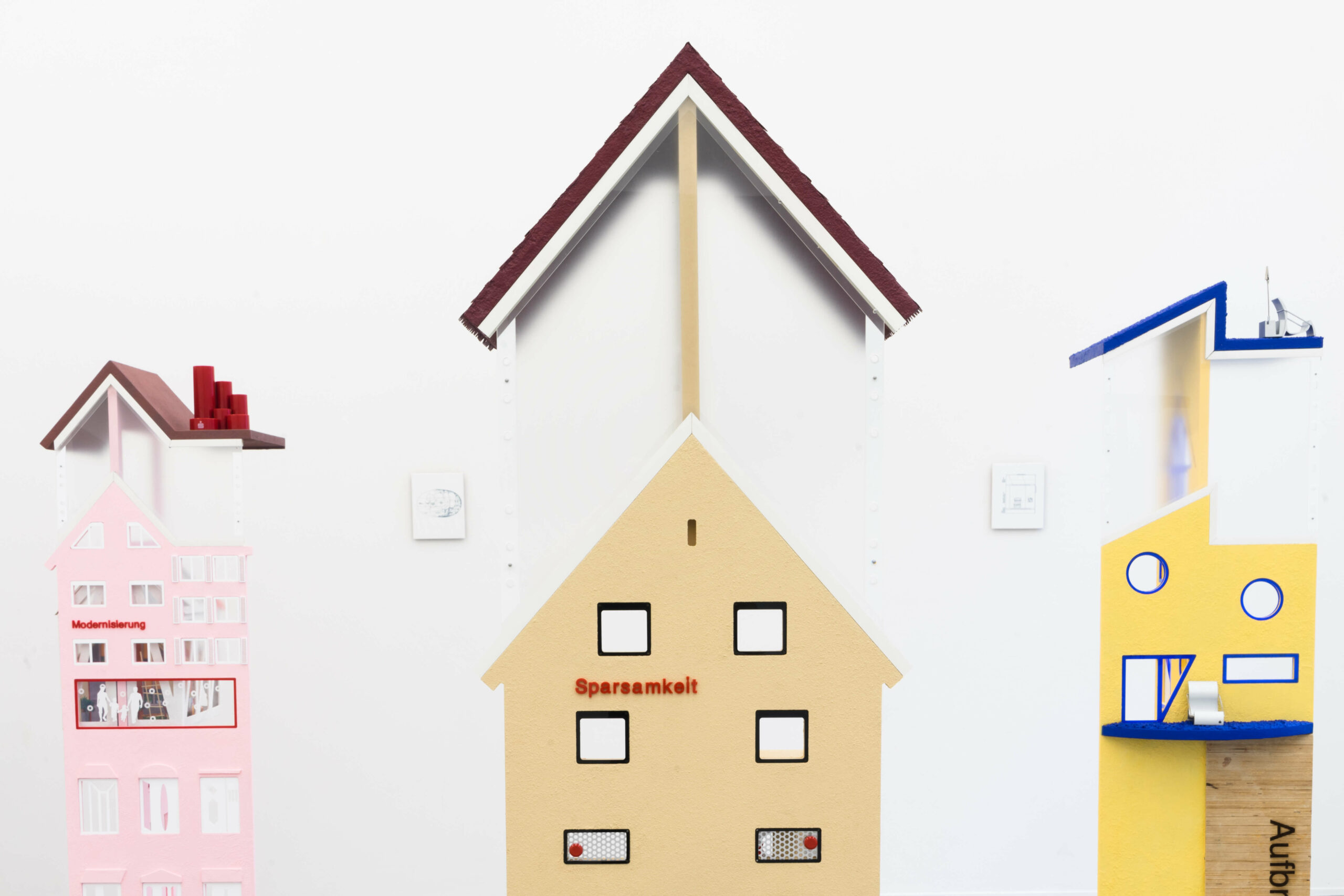
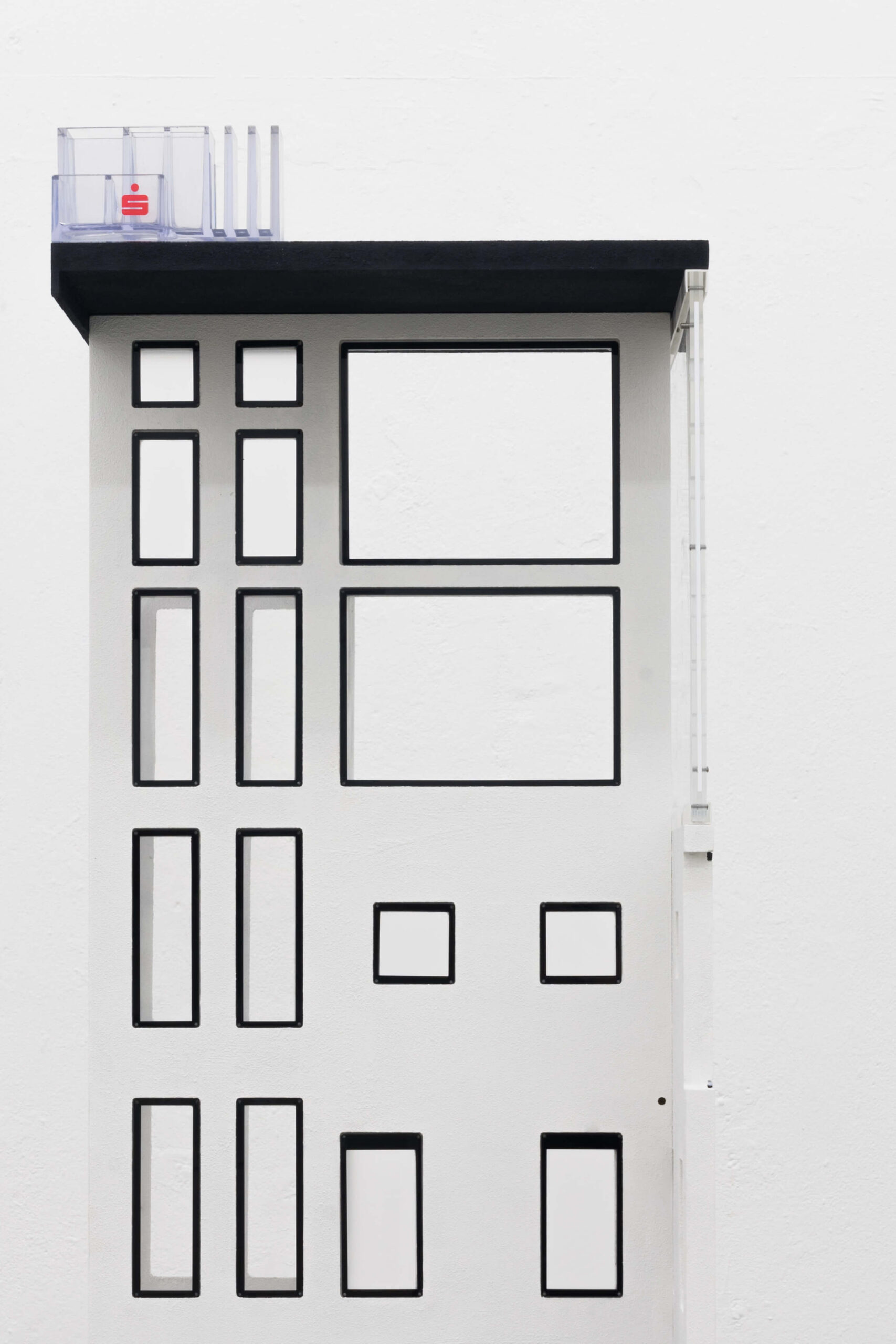
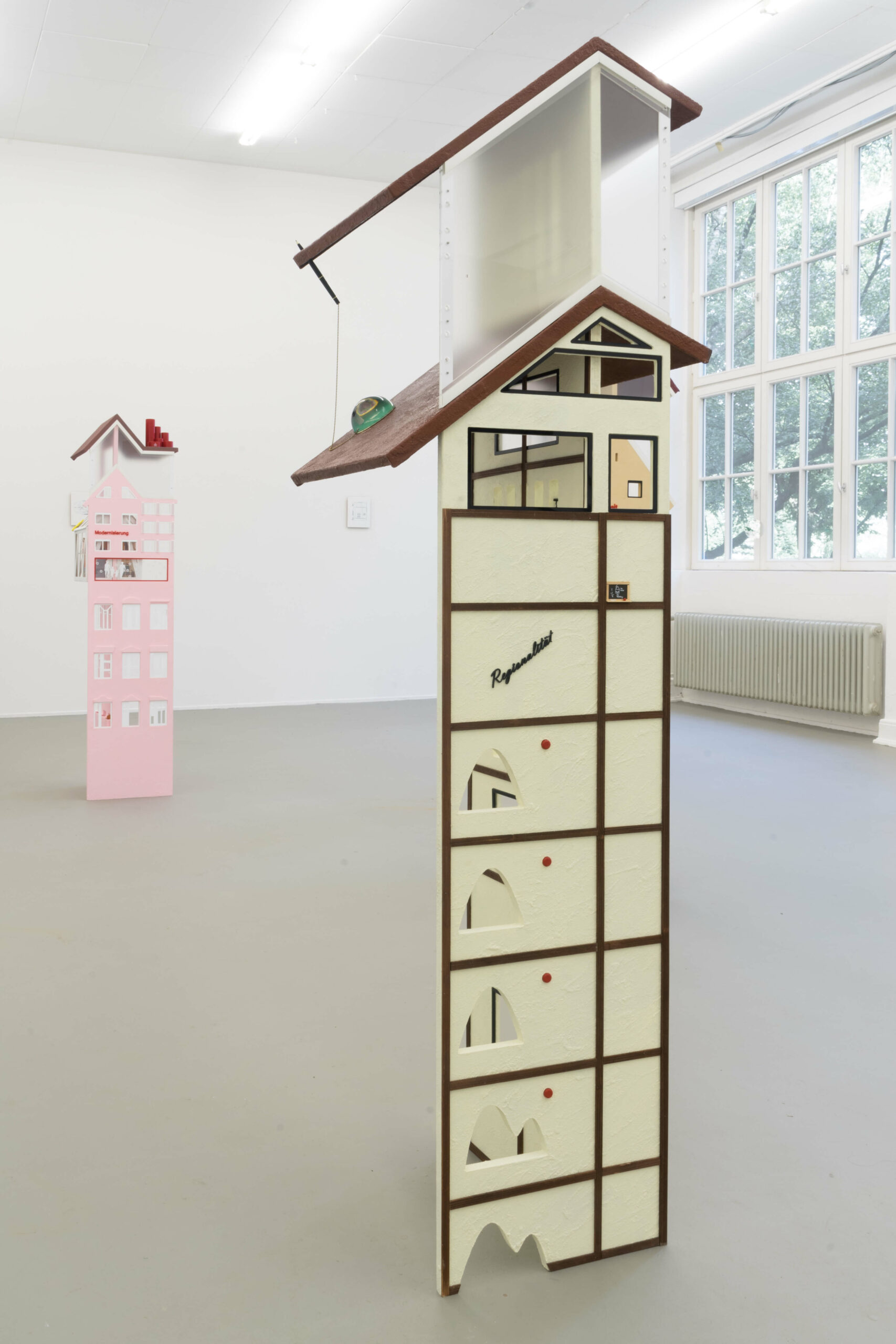
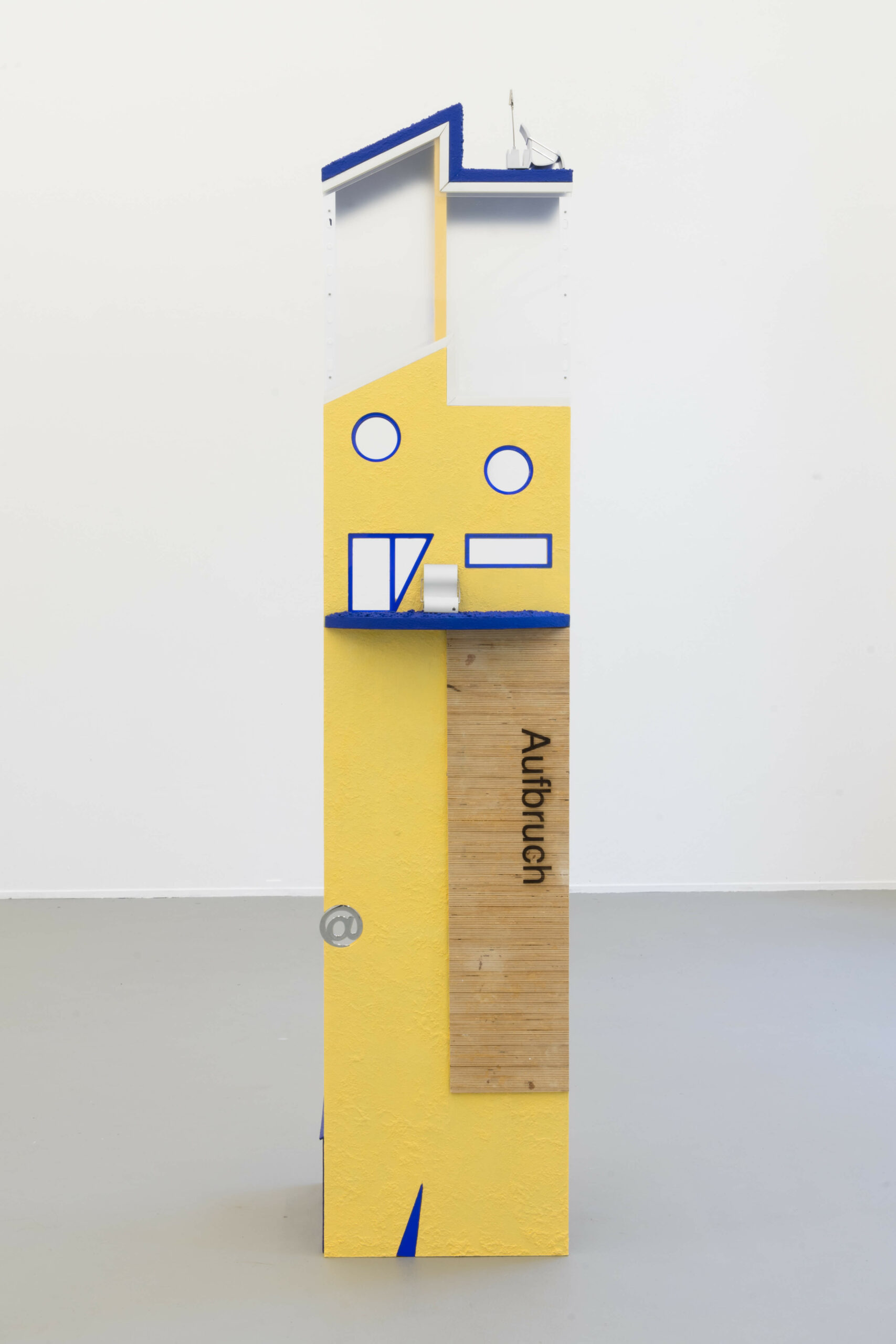
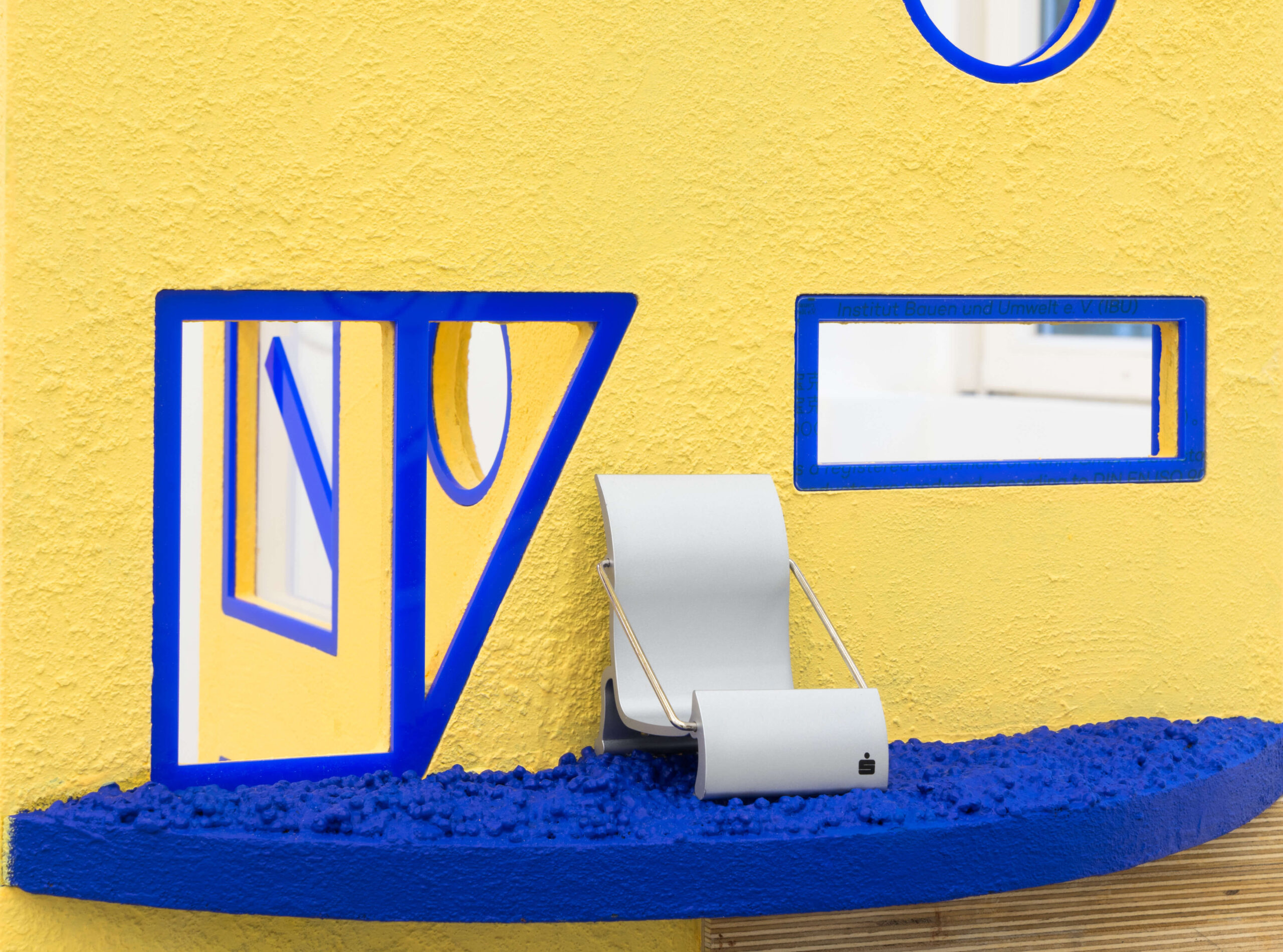
Jede von Zipfels Häuserstrukturen trägt ein Motto: Auf der beigen Struktur am Eingang steht „Sparsamkeit“, die sozusagen die ethische Grundlage des Aufstiegsversprechens bildet. Das warmweiße Haus mit Schindeldach und den Gewichten einer Schwarzwalduhr veranschaulicht den in den 1970er-Jahren in Bad Krozingen trendigen Heimatstil. Es ist mit „Regionalität” beschriftet. Das rosafarbene Modell mit dem Motto „Modernisierung“ zeigt eine klassische Kleinfamilie als idealtypische Bewohner des Eigenheims. Das gelbe Modell mit blauen Fensterrahmen trägt die Aufschrift „Aufbruch“. Es repräsentiert die Postmoderne und steht für den Stil der 1990er-Jahre, als Farben und Formen etwas wilder waren. Mit „Tradition“ wird eine Struktur bezeichnet, die einen reduzierten, modernistischen Stil aufweist. Mit diesem können sich heute viele Leute identifizieren.
Zipfels Häuser sind eine Mischung aus Hochhaus und Einfamilienhaus. So lässt sich in jeder Struktur auch ein Eigenheim entdecken. Durch die Mischformen nehmen Zipfels Skulpturen auf die politischen Diskussionen darüber Bezug, welche Art von Wohnungsbau der bundesrepublikanische Nachkriegsdemokratie am förderlichsten sei. Nach dem Motto „Eigentum schafft Bürgerlichkeit“ entschied man sich damals für die Eigenheimförderung, sah man darin doch einen Stabilitätsfaktor der jungen Demokratie.
Text translated from: Heidi Brunnschweiler, Galerie für Gegenwartskunst Freiburg
In her work Häuser und Maxime, Karla Zipfel presents five architectural structures that illustrate typical home styles. She developed this typology formally and associatively based on her field studies in her hometown Bad Krozingen. Each of Zipfel’s house structures has a motto: the beige structure at the entrance bears the word “thriftiness,” which forms the ethical basis of the promise of social advancement.The warm white house with a shingle roof and the weights of a Black Forest clock illustrates the Heimatstil style that was trendy in Bad Krozingen in the 1970s. It is labeled “regionality.” The pink model with the motto “modernization” shows a classic nuclear family as the ideal inhabitants of the home. The yellow model with blue window frames bears the inscription “Aufbruch” (Departure/Disruption). It represents postmodernism and stands for the style of the 1990s, when colors and shapes were somewhat wilder. “Tradition” refers to a structure that has a reduced, modernist style. Many people today can identify with this.
Zipfel’s houses are a mixture of high-rise and single-family homes, with a single-family house incorporated into each structure. These hybrid forms refer to political discussions about the most suitable type of housing for post-war democracy in the Federal Republic of Germany. In line with the motto ‚property creates civility‘, the decision was made to promote home ownership at the time, as this was seen as a stabilising factor for the young democracy.